


|
|
By Simone (junglefrog), on February 3, 2010, at 10:24 pm
 vealtartar, mixed salad and chicorysoup
I promised you I would give the recipes of our cooking club, didn’t I? Well here is the first part with the starters. Very simple recipes but very tasty. If I had to pick one then my favorite is the soup which was lovely and went really well with the scallops inside. I did like the veal but you have to make sure you cut the meat really really fine as otherwise it is too much like …. well, how shall I put this… like naked meat… That sounds a bit weird but I hope you know what I mean!!
Here are the recipes!
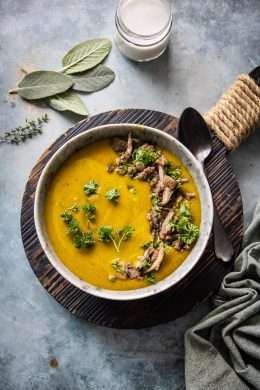
Chicorysoup with baked scallop
300 gr chicory
50 gr of butter
3 dl chickenfond
1,5 dl cream
pepper, salt
6 scallops
Clean the chicory and remove the bitter heart of the vegetable. Cut into small strips. Sprinkle with some lemonjuice to prevent discoloring.
Heat 25 gr of butter in a pan and saute the chicory. Deglaze with the fond and the cream. Put the mixture into a blender or handblender and blend until very smooth. Put the mixture back into the pan and add salt, pepper and extra butter to taste.
Heat some oil and very quickly fry the scallops lightbrown on both sides. Put the scallops into a small cup and put the soup over it and serve.
VEALTARTAR
400 gr escalope
1 sjalot very finely chopped
handful of chopped parsley
2 tbsp mayonaise
2 tbsp of ketchup
1 tbsp of sharp mustard (dijon or otherwise)
2 tbsp of worcester sauce
pinch of cayenne pepper
salt
capers
Cut the veal escalopes in very small cubes (and very small is very small but don’t puree it!)
Cut the sjalot very very fine as well. Mix all ingredients in a bowl and mix well together.
Well, how simple can it get, right? To present you can put some in a ring, press it and take the ring off.
We also had a little salad with the three amuse dishes we had but I didn’t think the salad was very special. It was nice but really not nice enough, so I will not be giving you that recipe…
We had a lovely white wine with this as well which is the one on the left!
The mains and dessert will be coming later too! Now I really need to go and check on some of you guys as I am sooooo behind in reading!

By Simone (junglefrog), on January 31, 2010, at 5:34 pm
 Menu for Kort Lontje January 2010
Last friday was the second time we were coming together with the cooking club Kort Lontje. Again the location was in Kookstudio K-O-K-S in Amsterdam and Mia was this time in charge of coming up with a menu and working that out together with Albert en Pieter. After the ‘heavy’ holidays the theme was ‘light’…. I got to say though that I absolutely loved the menu, but it was anything BUT light! So in that sense… the theme did not really work that well, but other than that it was a brilliant menu again.
This is what we made:
Palet of three amuses:
chicory with baked scallops
Mix salad with raspberry dressing
tartar of veal
Italian risotto with mushrooms and steamed filet of sole
Quail made into a little package (rolled roast) with sauerkraut and truffelpuree
Tartellette of poached pears, poached pearicecream, poached pear sauce

We again had some people do the starters, others the mains and the dessert, so we each had our separate tasks. I have to say that I made the risotto and that wasn’t the most exciting as I have done risotto many times at home, but ok, someone has to do it, right?
I will share the recipes for every dish with you in separate posts as it will be too long to do it otherwise! So more coming up!
By Simone (junglefrog), on January 28, 2010, at 3:23 pm
 Nanaimo bars
Ok, don’t you all dare to laugh at me… Yes I forgot to make the challenge but I think I came back pretty quickly didn’t I? I was lucky that an appointment for today was cancelled so I all of a sudden had time to make these lovely bars.
I first started with making the Graham wafers, which were very simple to make really. I did not make them glutenfree. I wanted to but to find glutenfree flour here is simply impossible. At least not in any store nearby so I figured I might as well do the wheat version. I did use part riceflour since I still had that from when I went to Amsterdam and saw it. I had no idea what tapioca was, so didn’t bother finding that and just went with wheatflour.
I didn’t have vanilla essence either, so I substituted this with cinnamon essence and I actually think that was a brilliant choice as I loved the slight cinnamon flavour of the cookies. I kept eating little bits of the dough. It was so good!
I had never had Graham crackers before so I wouldn’t be able to tell you what they are supposed to be like but I quite liked mine. I think I did roll them out a little too thickly. I mean 1/8 inch doesn’t mean anything to me except that it is roughy 1/8 of roughly 2,5 cm… I was a bit too lazy to actually calculate it so I just guessed a bit what would be the right thickness. And then again, I don’t know if mine were wrong or not as I have nothing to compair them with. They did bake longer then the 25 minutes that Lauren had given, but considering the fact that we have a terrible oven in need of replacement; that is probably the reason. O let me first get one thing out of the way:

The January 2010 Daring Bakers’ challenge was hosted by Lauren of Celiac Teen. Lauren chose Gluten-Free Graham Wafers and Nanaimo Bars as the challenge for the month. The sources she based her recipe on are 101 Cookbooks and www.nanaimo.ca.
Once they were baked I got on with making the middle layer which consists of looooots of sugar, butter, cream and custard. I thought it was very very sweet so to counterbalance that a bit I added about 2-3 tablespoons of lemon curd and that did the trick for me. The sourness got rid of a bit of the sweetness and I love the subtle lemon flavor. But then I am a true lemonlover so anything lemon is good in my mind. But I think it went well together with the rest.
I did think that the qty of the middle layer was not really enough compaired to the other layers. I think my form was about the right size but I felt I had to spread the yellow layer too thin resulting in just a very small layer in the middle. So I actually didn’t spread it through the entire tin but left about a quarter open. So I will have only the bottom on that part…
Making the graham crackers was really the biggest part of the work and the rest was pretty easy. I made the photos while the top layer of chocolate had not really been long enough in the fridge so it is a bit too moist still, but I totally loved the taste. As I said I am glad I added the lemon in there as that gave it a little bit of freshness with all the heavy chocolate in there. It is VERY filling and since I just had lunch I really only tasted a tiny bit. Tom did eat an entire ‘bar’ (the one in the photo) and he thought it was extremely good too.
Thankfully as we have quite some of it left…
So there you have it; the Daring Bakers January challenge; behind schedule but not too bad! I am happy that I still got to make them as I hate missing a challenge!!
For the full recipe have a look here and to see what the other amazing Daring Bakers have made you can check here
If you want to keep with my changes then substitute the vanilla essence in the graham wafers for 2 tbsp of cinnamon essence and add to the middle layer about 2 large tablespoons of lemon curd. (BTW; I love lemon curd! I can still remember seeing it somewhere for the first time and buying a jar, not really knowing what I was gonna use it for, but I use it for soooo many things! Love it!)
So apologies for posting late. Will do better next time!
By Simone (junglefrog), on January 27, 2010, at 11:11 am
If you came here thinking to look at beautiful Nanaimo bars you’re in for a disappointment. I all of a sudden realized TODAY that I should be posting these lovely bars TODAY… And I forgot; completely and utterly forgot to make them! How incredibly stupid… I had so looked forward to making the bars that Lauren of Celiac Teen had picked out for our challenge this month. But I will make them, so check back in a couple of days for the results!! Sorry Lauren, my mum always used to say that I forgot my head if it wasn’t attached to my body…
By Simone (junglefrog), on January 26, 2010, at 7:38 pm

I first read about the Ten Weeks to Healthy bloggroup through someone else’s blog (I’m terrible in remembering where I read what!!) and I was quickly pointed to Lori from Recipegirl to read all about this challenge to get healthy in the first ten weeks of the year. Not sure if I will be able to do it in ten weeks; it’s probably gonna be longer, but I thought it was a great initiative so I joined. I haven’t blogged about it before yet, as I kept forgetting but today is the day. And I thought it made sense to include a deliciously healthy recipe too.
So what are my goals for 2010 and how do I plan to achieve these and how far did I come for now?
1. Eat healthier and more regular. We have a pretty hectic life with irregular schedules and clashing schedules at that too, so by the end of 2009 things had gotten slightly out of hand. I found that I really need to plan our meals taking our schedules into consideration as much as possible and then stick to the schedule as much as possible. The mealschedule that is. So since the beginning of the year I have been writing down our meals for the week, trying to focus on getting healthy food, eat lots of veggies, more fish and fruits. Less of the snacking and less of the alcoholic beverages too. We still drink a glass of wine in the weekend but try to limit it to the weekend.
2. Loose about 20 kgs. That sounds like a lot and well, quite frankly it is a lot, but it is also necessary. I have a quite severe case of scoliosis and while not life threatening in any way it does get pretty painful at times. And those times are in general when I ‘forget’ to work out and gain too much weight. Since the beginning of the year I have already lost 6 kilo so far so I am well on my way to loose the 20 in total. I have set myself small steps with the weightloss as I don’t want to go on a strict diet. That just doesn’t work for me as I love food too much to eat only crackers!! (or shakes even worse…) So the idea is to lose this weight through maintaining a healthy balance between food and exercise.
3. Exercise more and don’t use anything as an excuse not to go. I used to go to spinning class 3 times a week but then I got really busy with work, so couldn’t go during my regular hours and instead of going at another time I skipped altogether. And the one week became two weeks and before I knew it; it was two months that I last went to the gym. I’ve only gone back to exercise since last week so still trying to get back to the routine again. I am also planning to vary more with my workouts. While spinning is great exercise and perfect cardio; doing it three times a week and nothing else is sort of besides the point of exercise. Variation is the key! It’s hard getting back into the motivation needed to go at least three times a week and with work as irregular as mine it is hard sometimes but I told a friend that I met at the gym that we need to start motivating eachother. I tend to skip less easily when I arrange to meet her, so that is what we are doing now.
So that are my mine three healthgoals for this year. ! Go to Lori’s blog if you want to see the other participants of this fun and useful event!
Now on to our recipe of today; I had picked a recipe out of the Delicious of this month and I love their healthy recipes that they have at the beginning of the year so I picked for this week almost all of the recipes out of there. I had never cooked fish in parchment paper in the oven before and believe it is called en papillotte. I was a little afraid that the entire dish would be dry but it was not. The fish was delicious and moist and the rest of the meal was also quite satisfying. Definitely a keeper!
2 tbsp of olive oil
250 gr wintercarrot, in cubes
3 twigs of sellery in slices
1 yellow pepper, in pieces
4 sjalots, in pieces
200 gr mushrooms, in quarters
1 orange, zest the peel and keep the juice
500 gr fish, you can use either pangafilet, tilapia or any other white fish. Fresh would be best but frozen works too.
Heat the oven at 175C.
In a pan heat 1 tbsp of the oil and bake carrots, sellery, peppers and sjalots on low for about 5-8 minutes stirring occassionally. Mix 1 tbsp of oil with the orange zest and rub that into the fishfilets. Season with salt and pepper.
Lay down 4 large pieces of parchment paper and divide half of the vegetable mixture among the 4 pieces of paper.Put the fishfilets on top of the vegetables and cover with the rest of the vegetables. Sprinkle with some orangejuice and add some more pepper and salt. Fold the packages down well, but make some room for steam escaping. Put the packages on a bakingtray next to eachother.
Bake them fish for about 12 minutes in the oven until the fish is just done. Good with nutty rice (haha… it’s rice with nuts… not necessarily nutty… )
If using frozen fishfillets make sure they are defrosted completely before you put them in the oven otherwise it might get dry too quickly.
You can vary the vegetables with the seasons; in spring you could use fennel, spring onions, raw spinach and sugarsnaps for instance…
Just try it; you’ll love it!
By Simone (junglefrog), on January 24, 2010, at 6:20 pm
 Poffertjes
We must all have them; recipes that you have know so long or have taken completely for granted but when asked about them you go “Uuuhhhh… I actually never made that!!” I had that realization when Nurit of FamilyFriendlyFood asked me if I had a recipe for poffertjes… Eh… well no, and now that I think about it; I have never made them myself!! When we were little my parents did have a poffertjespan and they made them on regular basis as we loved those little pancakes, but that was sort of the last time that I had tasted homemade poffertjes. During the summermonths in one of the town that I used to live close by, there is always a typical “OudHollandsche Poffertjeskraam” and we would go there every summer, at least once. The poffertjes there are fantastic and now that I have made them myself I might actually ask them for their recipe next summer!
Anyway, I did look up a Dutch recipe for Nurit and send it to her via email at which point we started to think about blogging about this together. How fun is it that we can virtually cook together?? You should really check out Nurit’s blog. She has great stories and a fun way of writing and great photos too!! I especially love her photo-journeys through every day life.
For making poffertjes the first thing you need is a poffertjespan, which is a castiron plate with “holes” (not actual holes ofcourse, but some kind of dents) in them to support the poffertjes and to give them their round shape.
 Not my photo but to illustrate the pan!
Since I had never made poffertjes before I had to go and buy one first before I could start making them. In the meantime Nurit had also done some additional searching and come up with a couple of additional recipes which I ended up using. I actually think I sort of mixed them all together and made my own version of the recipe. The funny thing is that I think just one day before Nurit asked about these poffertjes I read a post about a Danish specialty which was called Aebleskiver and looks exactly like poffertjes! They use buttermilk in it so I imagine that the taste might be very different but I am certainly going to try those next. Nurit are you gonna join again?
I was shocked to read just a few minutes ago that poffertjes actually originate in france!!
They were first baked around 1795 om monastery where they made the holy bread (sorry I have absolutely no idea how those are called in English!! I’ll look it up!). There was a shortage in wheatflour and an abundance of buckwheatflour so they started experimenting and that is how the first poffertjes came to be.
Marketpeople and salesvendors who bought products from the monastery took the recipe and during the french revolution they marched with the army of Napoleon to the Netherlands and sold the poffertjes at yearmarkets and fancy fairs. And that is how the “Dutch” poffertje came to be Dutch. I actually don’t think you can find them in France anymore. Have never seen them there!
So how did I do with baking my first ever poffertje. I found the process slightly more difficult then I had anticipated. The batter needs to rise for about 45 minutes but then becomes quite thick so getting small amounts in the holes was hard and by the time I was at the 6th hole, the others were already starting to go to fast. So I ended up with baking them for a little bit too long. Turning them quickly also requires some practice so that didn’t help ofcourse. I did think the taste was very good and I can see how they would work great if you bake them a little shorter and serve them a little warmer. lol.. I was so busy trying to turn them and then getting them out of the pan, that by the time I had them all the first ones were already beginning to cool down. Plus I then forgot to put the butter on top so the butter didn’t particularly melt very well. Poffertjes are traditionally served with butter and powder sugar, but you can vary with them to your liking. Rum in the batter is a very well known variation here and the list is quite frankly endless.
I decided that it would be a fun comparison test to make the Danish version and also make a ready made batter for poffertjes. Since they are popular here, especially among kids you can buy a flourmixture already complete for poffertjes. Add milk and you’re good to go. I am just curious to find out how that might be different in taste to homemade flourmixtures. So stay tuned for more poffertjes to follow! For now here is the recipe!
POFFERTJES
125 gr all purpose flour
125 gr buckwheatflour
3 dl lukewarm milk
7 gr dried yeast
1 sachet of vanilla sugar
2 eggs
1 tsp of salt
melted butter
Officially it’s probably wise to sift the flour but I couldn’t find the sieve so didn’t do that part. It worked fine… Add the yeast and the sugar to the lukewarm milk and let it dissolve. Make a little hole in the flour and put the yeast mixture in. Stir it all together and gradually add the rest of the milk, the (beaten) eggs and a little bit of melted butter to give the dough the desired consistency. Stir once more.
Let the dough rise for 45 minutes to 1 hour, under a humid cloth in a warm place.
Put the poffertjes griddle on the stove and lightly grease the cavities. Fill them only halfway or less with the dough (and that is the tricky part!!) Bake the poffertjes quickly until they are golden brown, then use a fork to turn them around, baking the other side golden brown as well. Arrange the baked poffertjes on a warm plate. Dust with powdered sugar and put a lump of butter on them before serving. Serve hot!
Don’t forget to check out Nurit’s poffertjes adventure too!
By Simone (junglefrog), on January 21, 2010, at 3:19 pm
 Taken with two small halogen lights
For today’s post I am gonna try and explain how you can solve some of the problems that occur when shooting in low light or at night. Especially at this time of year it seems to be impossible to shoot your dinner in daylight since, well, most people don’t eat their main meal during lunchtime right? And while certainly not impossible; shooting at nighttime does create some problems and most have to do with the fact that artificial light has a different color as natural daylight.
So in order to explain you how to shoot during the evening you have to know that each type of lamp, whether that be a regular bulb, halogen, fluorescent light etc. has it’s own special color temperature. Daylight itself can vary in color during the day; early in the morning the light is bluish, while later in the day it becomes more warm and yellowish. And again that varies in each season. The color of the light is generally referred to as degrees Kelvin. I won’t get all technical here but as a rule keep in mind that daylight is generally around 5000K (as in Kelvin). A flashlight is daylight balanced at 5500K, which is why when using flash, the colors in your photo tend to be correct. Colortemperature in photography is generally referred to as white balance.
But as we all know flash is just too harsh and unattractive in general. I forgot to take a photo with flash while doing the other shots so it looks slightly different than all the other photos but you’ll get the picture. Very unattractive!
 Direct flash vs indirect flash (via the ceiling) on the right
Even with flash there is a huge difference between direct flash which is the left photo or indirect flash, which is the photo on the right. Here I bounced the light of the ceiling, but this is ofcourse only possible if you have an SLR with a separate flash with a swivelhead. There are trics if you don’t have that but that is maybe more for a separate topic. For now we will focus on regular lights you might have in your home.
I started this excercise of with taking a photo without any light. I did shoot all of these during daytime but I have curtains in the studio that make it virtually nighttime, so trust me when I say there was no daylight coming in. This will not work at night because if it is pitchblack you’ll be waiting forever until your photo is taken. In this case I had to wait 30 seconds for the exposure to finish (needless to say that you cannot do this without a tripod!)
 Left original from camera, right corrected with greycard
As you can see the original on the left is very orange and has a red tint. I am guessing this is due to the fact that my curtains are some kind of beige so the little light that was coming in probably cast a weird color. I shoot in raw – always – and have used a
 Grey card
greycard to correct the whitebalance afterwards. A greycard is nothing more then a card which you position in your scene and then take a photo in the same light conditions as your actual photo and let’s you adjust the while balance later in software.The reason for using a ‘greycard’ is that it represents an average neutral.
Keep in mind that you can only do this properly if you shoot in raw! (which I would strongly urge you to if you have an SLR and difficult light situations. If you don’t have an SLR you can try the manual whitebalance instead, which some, not all, compacts have. To use the custom white balance you take a photo in the same situation as your final shot of a white sheet of paper. You set your camera to custom white balance and it will ask for a reference point. You look up the photo of the white sheet that you took (make sure it shows nothing else but the white sheet) and select that. For all photos now taken in the same light situations your camera will remember that setting and adjust the whitebalance accordingly.
I have shot all photos here except the flashphotos with exactly the same setting on a tripod.
If you do own an SLR I would recommend you get familiair with shooting in raw. It’s not as complicated as you might think but it can save your photo in situations like this.
After taking these shots without any additional light I used small halogen lights. They were small tiny lights so if you want to use those diffusing the light might make the shadows less harsh but I actually liked the effect they gave so I kept them as it. I will first show you a photo of the setup and the lights that were used.
 Lighting setup with two halogen lights and foamboard reflector
As you can see very simple. I used the mirror in front to decrease a little bit of the heavy shadow on the first mandarin.I started by using one light which is the first photo below, but liked it more with two lights
And this is the end result; first on the left the uncorrected version, then the corrected version and then the version with two lights.
 From left to right; with one light uncorrected, with one light corrected and with two lights corrected
In case you were wondering; the tablecloth is light blue.
As you can see in the background on photo two; the light becomes in general much bluer when corrected (again I did this with a greycard) and because there is now a big difference between the light in the front and the light in the back I preferred the two light version where you cannot see the background behind it anymore. But the results are quite acceptable I think.
So then I went on to use a building light or construction light, not sure how you would call them in English but they are the kind of lights that are used in general on building sites. One of the (big) disadvantages with these lights is that they become scorching hot, so unsuitable to use if you have little kids running around. I wouldn’t go for these but they are cheap and they work too.
Again first a photo of the setup with one light; I ended up using two lights in the last photo of the series.
 Building light or construction light
The photos I took are again from left to right; uncorrected, corrected and with two lights.
 From left to right; no correction, corrected and with two lights
As you can see the light without correction was quite yellow and very easy to correct with the use of a greycard! Because I was in the studio I did not have any regular lightbulbs but essentially the technique would be exactly the same, wether you use fluorescent or whatever lightsource. Just make sure you do not use different kinds of lightsource as that will make it almost impossible to correct for the right colortemperature. So always use sure that you use two of the same light sources if you use two. For reflective material I used cheap foamboard to lift the shadows a tiny bit. You can always also use little mirrors if you want to light up certain parts of your image or give something a little shimmer.
Last is a daylight balanced light which are not that expensive to buy if you want to.. It makes it easier to handle if you shoot with a compact or always shoot on jpeg (and don’t feel like using raw) You can buy small light such as the Lowel Ego Lights, which are great to work with or any other kind of brand really. I have Interfit which I don’t know if that is English or Dutch, but regardless of which you use make sure they are daylight and not anything else.
 Daylight lamp
Even with a daylight lamp you might still have to correct a little bit. Make it a habit to use your greycard as that can make a huge difference! Below the results with the daylight lamp. I had only one so can’t show you how it looks with two, but as you can see you don’t really need two to get good results. I have one in the studio and one that I use at home when I want to shoot something in the evening. As you can see the lights have a wider area making the lift softer then a pinpoint light such as the little halogen lights. But ultimately it depends on what kind of effect you want to achieve.
Because there was really little difference between before and after light correction for the daylight lamps I thought I show you one taken with the daylight lamp (on the left) and one taking with studioflash (on the right) Really not that big a difference. The shadows are a little softer but that’s about it.
 On the left daylight lamp and the right studioflashes
As you can see it is very well possible to shoot at night with results that are as good as shooting in daylight and the good news is that you do not need very expensive equipment to do so. It does help if you own an SLR and get yourself familiair with shooting in raw and using a greycard or custom white balance, but even with a compact you can achieve good results or maybe I should say better results that shooting with flash. With any kind of light you have to pay attention to how the light falls on your subject and where it creates shadows. Daylight usually comes through a large window and is by that alone softer then articificial light but if you use that to your advantage there is no reason why you cannot take good photos in the evening.
Good luck and let me know if you have questions!
By Simone (junglefrog), on January 18, 2010, at 2:34 pm
 Chicken, lentil & sweetcorn chowder
How’s the weather over at your end? Here it is cold and miserable at the moment. There is still snow but it is melting and instead we get rain. I think I prefer the snow to be honest.. (did I tell you already that the Dutch are notorious for their complaining about the weather?? It’s never good, too cold, too warm, too hot plus we like to talk about… a lot… Ofcourse I am not a typical Dutch person.. ) I was supposed to have an appointment in the studio but the lady just cancelled. Is it weird if I go “YEAH” after she cancelled? It would – ofcourse – potentially be a new customer, so I should be said and crying in the corner of my office. Not so much…
Because the weather is soooooo cold and miserable a nice hot soup for lunch is always very comforting. I was going through the new issue of Good Food and saw this lovely chowder. Now if you ask me when something is a chowder and when something is just a regular soup; I have no idea. So I looked it up in Wikipedia and according to the description; Chowder is any of a variety of soups (duh…), enriched with salt pork fatback and thickened with flour or more traditionally with crushed ship biscuit or saltine crackers, and milk. To some Americans, it means clam chowder, made with cream or milk in most places, or with tomato.
The word chowder comes from the cooking pot in which is it cooked, known in French as Chaudiere, from Latin caldaria (akin to English cauldron).
So I kind of feel like Harry Potter now, stirring my chowder in a cauldron..
This is a very light variety and the taste is fabulous. It’s relatively quick although it does need a little bit of cooking time, but it’s worth the wait! Perfect for a cold winterday! (this is ofcourse to make up for posting a cucumber soup in the middle of winter, although technically the other part of the world has winter so there is always something for someone.)
CHICKEN, LENTIL AND SWEETCORN CHOWDER
Ingredients: (serves 4)
4 spring onions, trimmed and thinly sliced
850 ml chicken stock
250 gr potatoes, diced
300 ml skimmed milk
250 gr boneless, skinless chickenbreast, cut into small pieces
140 gr frozen or canned sweetcorn
410 gr Puy lentils or green lentils, rinsed and drained
chopped chives, to serve (optional)
1. Place the spring onions in a large pan with 6 tbsp of stock and seasoning. Cover and cook for 2-3 minutes until softened. Add the potatoes, the rest of the stock and the milk. Bring to the boil an simmer gently, partially covered, for 10 mins or until the potatoes are just tender. Ladle out about a quarter of the mixture into a blender and whizz until smooth. Stir back into the pan.
2. Add the chicken, sweetcorn and lentils to the pan and cook for 5-7 minutes more or until the chicken is cooked. Check the seasoning and serve in warm bowls, scattered with chopped chives (if using).
Obviously this is very easy to make into a vegetarian meal. I loved the little bits of chicken in the soup but it would be just as tasty without or maybe with some other veggies added in there. I would say great base soup for lots of different ‘chowders’ (always make me think of a baby shower…)
By Simone (junglefrog), on January 15, 2010, at 2:25 pm
 Indian cucumbersoup with mint
Let me just start by saying that this is maybe not the most logical dish while in winter. It’s lovely and refreshing, but also… it is supposed to be eaten cold, so if you’re in a summery country right now, this might just be the soup for you. Or if you’re like me – trying to loose weight – it might also be a great lunch dish. I have to confess that I actually did not eat it that cold; you’re suppose to have it chilled for a while before eating it, but since the temperatures outside are still sort of below zero, I figured it would be ok to eat it lukewarm. (saved me the trouble of having to wait until it was cool enough as well. Impatient!!) I am also not sure how authentic Indian this would be, but I guess they call it Indian because it does have some Indian ingredients in there (cumin, cilantro, yogurt; which technically are not Indian ingredients but are just featured in Indian food a lot, right?) It’s a bit of a weird day today as Tom is working from home as well. That then tends to feel like we have a day off! We slept in a little (what better way to start the day then to snuggle up under the warm covers when it’s freezing outside??), then had breakfast in bed and then I figured I should get to work or we would lie in bed all day. I had to finish a weddingbook since the couple is coming tomorrow, plus I have to make a quote for a BIG assignment for foodphotography! Fingers crossed people!!
So on to this soup; it’s quick, it’s easy and very tasty. You could very easily make this less vegetarian by adding maybe little bit of smoked bacon or smoked chicken (after the pureeing part though). I didn’t follow the recipe in terms of qty’s or measurements; just threw in what I thought would be good so just follow your own judgement when adding the spices.
Ingredients:
Cucumber, washed and seeds removed. I used about half a cucumber which would do for two people. Slice the cucumber in cubes
1 onion, finely chopped
ground coriander
ground ginger
ground cumin
ground piment
vegetable stock or use a stockcube and about half a liter of water
Yogurt
mint
You can also add fresh cilantro to it, if you’d like. The stock and the spices give it enough flavor on it’s own but feel free to add more pepper or salt if you want to.
In a medium saucepan heat the oil and fry the onions on medium fire for about 1 minute. Add the cucumberslices or cubes, add coriander, ginger, cumin and piment to your taste. Add 1/2 liter of stock or 1/2 liter of water and a stockcube and boil for about 8-10 minutes until the cucumber is soft.
Puree the soup in a blender or foodprocessor, add salt if you want and leave to cool. Once cooled of spoon the yogurt through the soup. I just added enough yogurt until it was to my liking, so just taste as you go along.
Serve with fresh mint.
PS…. I have lost already more then 5 kilo since beginning of the year!! Whoohoo!!
By Simone (junglefrog), on January 14, 2010, at 8:00 am
 Chicken satay
I love satay, always have…. there is just something utterly satisfying about that lovely rich sauce and the marinated meat. I like all kinds of satay really, pork, beef, chicken and I would probably like it in a tofu version as well. So imagine my delight when I found out that the challenge for the Daring Cooks for the first month of the year would be to make satay! One of the mandatory things was to marinate the meat and to make your own sauce.
The January 2010 DC challenge was hosted by Cuppy of Cuppylicious and she chose a delicious Thai-inspired recipe for Pork Satay from the book 1000 Recipes by Martha Day.
So that was not too complicated to do and although not entirely within the limits of my healthy eating resolution… it still was quite good! Making the marinade was simple; I put everything into the foodprocessor, gave it a couple of pulses and it was done. I chose chicken as unfortunately most of the beef in our supermarket is either too expensive or simply not that good, so I opted for the save thing to do here. Ofcourse considering that the marinating makes the meat more tender I could have tried it with a cheaper cut of meat but I only thought about that once I was back home and ready to start… Tsss..
The chicken was marinated for about 6 hours I think all in all. We had dinner quite late that night and I started the marinating around the afternoon somewhere. Didn’t really time it as I thought it would be sufficient. Looking at the marinate sauce it was a little chunkier than what I am used to. In most cases for satay we actually use a premade marinade (yes, yes, lazy I know) that is on a ketjap/soy sauce base which is darker and more fluid than this marinade. In terms of taste it was totally different then what we normally have. I didn’t change anything in the marinade recipe, so just went with the ingredients and roughly the qty’s that cuppy gave. And it was good, not thrilling or mindblowingly good, but good.. I might change it for next time as I do think this makes a great base to start working on a marinade that has a little more punch. Overall the taste was very – how shall I describe this – flat maybe? That sounds a bit negative and it wasn’t but for lack of a better word…
Now on to the peanut sauce; for me a satay is not called a satay when it is not accompanied by peanut sauce, so naturally I opted to go for the peanut sauce instead of one of the other options which also sounded great by the way and I might try those at some point in the future.
This peanutsauce has coconut milk in it, which made the taste also different from the regular and I loved the coconut taste in it. Initially I thought it was a bit too overpowering if you kept to the qty’s in the recipe so I added more (probably double) peanutbutter and some of the other ingredients, but also here I would have liked it to be a little spicier. That was probably largely due to the fact that I thought I had forgotten to get dried chillies only to realize after the fact that I still had some stashed away.. :Y Hmmm, silly me…
Overall this was a great challenge, well, to be honest, not really a challenge as we have made our own peanutsauce before as well as the marinating but it was still interesting to work with a totally different recipe. Now what I did NOT like was the fried rice we decided to have together with the satay. I had chosen – for better speed during cooking – to add a prepackaged spice mix for fried rice from a well know brand here that we have used before, but while I added the rice and then the spice mix I already noticed that it smelt of… well, it smelled of old goat really. What the F…?
There was no meat in the mix as we already had the satay and it was truly in the spicemix as the smell only became noticeable once I added the mix in! I didn’t say anything but while eating it I really did not like the taste either, so I said to Tom (who never eats goat or goatcheese or anything closely goat-related) that I though there was a weird taste to the fried rice. And he immediately said that yes, it smelt and tasted like goat! And that coming from someone who has no experience eating goat-stuff…. Needless to say I will never use that mix again, nor did we finish it. Good thing the satay was filling enough!
So if you want to try the marinade and the peanutsauce I have included the recipes below; for all the other options check out the other Daring Cooks blogs!
Satay Marinade
1/2 small onion, chopped
2 garlic cloves, crushed
1 T ginger root, chopped (optional) (2 cm cubed)
2 T lemon juice (1 oz or 30 mls)
1 T soy sauce (0.5 oz or 15 mls)
1 tsp ground coriander (5 mls)
1 tsp ground cumin (5 mls)
1/2 tsp ground turmeric (2-2.5 mls)
2 T vegetable oil (or peanut or olive oil) (30 mls)
1 pound of pork (loin or shoulder cuts) (16 oz or 450g)
Feeling the need to make it more Thai? Try adding a dragon chili, an extra tablespoon of ginger root, and 1 tablespoon (0.5 oz or 15 mls) of fish sauce. (I keep some premature (still green) dragon chili peppers in the freezer for just such an occasion.)
Directions:
1a. Cheater alert: If you have a food processor or blender, dump in everything except the pork and blend until smooth. Lacking a food processor, I prefer to chop my onions, garlic and ginger really fine then mix it all together in a medium to large bowl.
2a. Cut pork into 1 inch strips.
3a. Cover pork with marinade. You can place the pork into a bowl, cover/seal and chill, or place the whole lot of it into a ziplock bag, seal and chill.
Peanut Sauce
3/4 cup coconut milk (6 oz or 180 mls)
4 Tbsp peanut butter (2 oz or 60 mls)
1 Tbsp lemon juice (0.5 oz or 15 mls)
1 Tbsp soy sauce (0.5 oz or 15 mls)
1 tsp brown sugar (5 mls)
1/2 tsp ground cumin (2.5 mls)
1/2 tsp ground coriander (2.5 mls)
1-2 dried red chilies, chopped (keep the seeds for heat)
1. Mix dry ingredients in a small bowl. Add soy sauce and lemon, mix well.
2. Over low heat, combine coconut milk, peanut butter and your soy-lemon-seasoning mix. Mix well, stir often.
3. All you’re doing is melting the peanut butter, so make your peanut sauce after you’ve made everything else in your meal, or make ahead of time and reheat.
Page 1 of 2512345»...Last »
|
New Portfolio website!! I built a new portfolio website! Go and check it out at Fresh Food Photos and let me know what you think!
|
Recent comments